Record the movement data
Start with chain travel, bending radius, movement speed, acceleration, cycle frequency and expected service conditions. Also record whether the cable runs horizontally, vertically or in a long-travel system. These values allow the cable and chain layout to be checked together.
Use a conductor made for repeated flexing
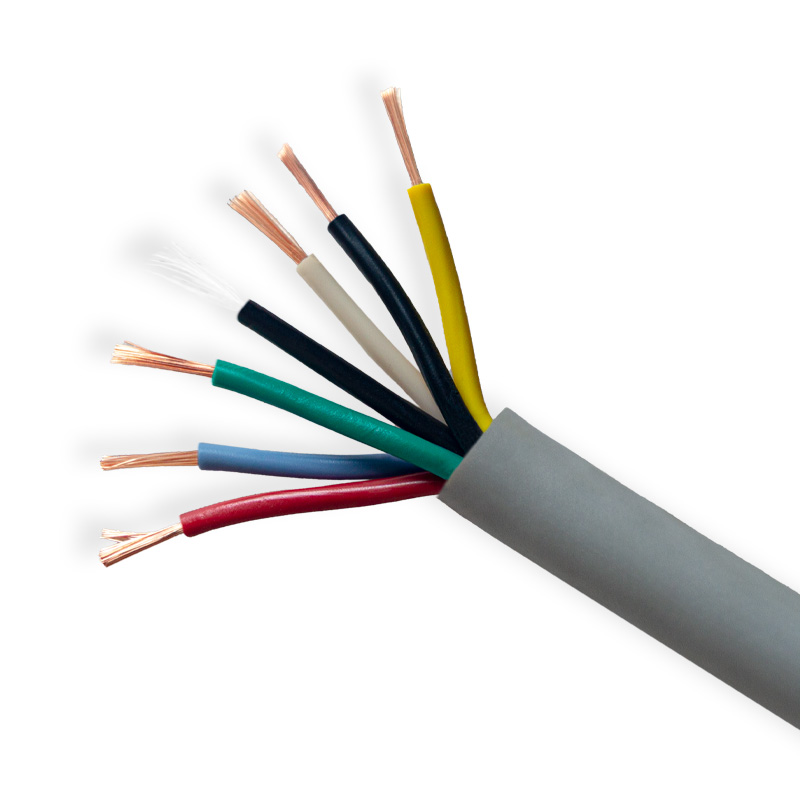
The published TRVV family uses Class 6 conductors under DIN VDE 0295 / IEC 60228. Fine-stranded conductors support flexibility, but conductor class alone does not guarantee suitability for every drag chain. The completed cable construction and the installation radius must also match the movement.
Choose shielding from the circuit
TRVV is the unshielded multi-core option. TRVVP adds shielding for circuits that require electromagnetic-noise control. TRVVSP uses a twisted-pair shielded construction for relevant signal applications. Confirm the signal type, grounding method and required shield coverage with the equipment designer.
Check jacket and environment
The published TRVV and TRVVP models use a flexible PVC construction. PUR variants are available where the application calls for a different outer-sheath performance. State any oil, abrasion, moisture, outdoor or chemical exposure rather than selecting PUR only from its name.
Install without adding stress
Keep within the specified minimum bending radius, avoid twisting the cable during installation and allow the cable to lie naturally in the chain. Separate cables where needed and do not overfill the chain. Confirm fixing points and strain relief with the chain and machine design.