Start with the cable movement
Record how the cable moves before choosing a model. A cable that hangs vertically, winds on a drum or travels with a festoon system is subjected to different mechanical forces. Note the travel distance, movement frequency and available installation space.
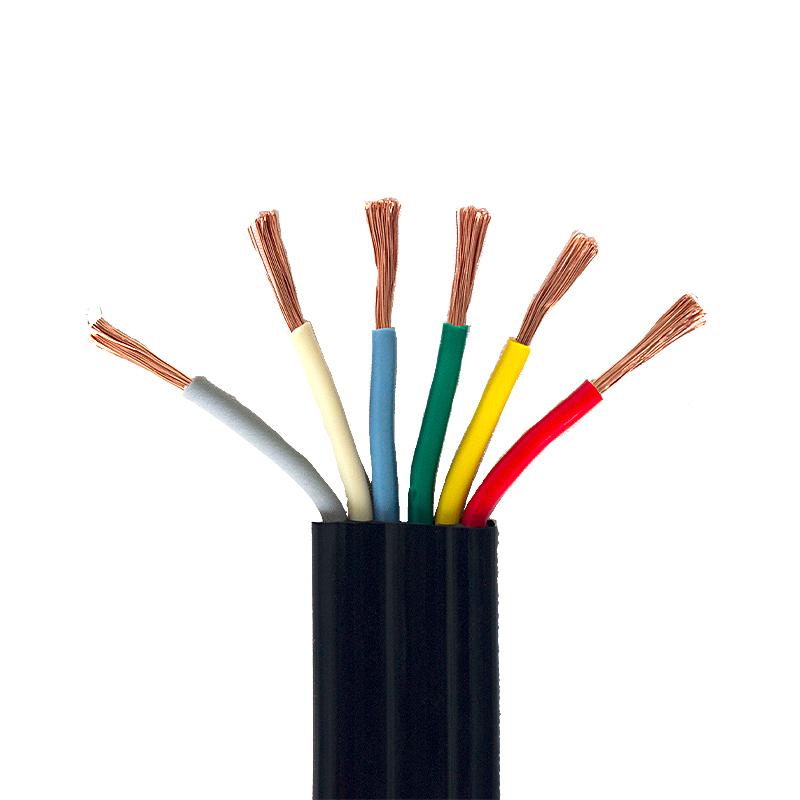
Flat cable is often used where several conductors need to move together in one plane. Its profile can help the cable stack and bend consistently in festoon and lifting systems. It does not remove the need to check the minimum bending radius or tensile support.
Define the electrical requirement
List the rated voltage, core count, conductor cross-section and any protective conductor. The YFFB and YFFB-G models published on this site are rated 450/750 V and use Class 5 conductors. The final core arrangement and size must match the equipment circuit and load.
Do not select a cable from the outside dimensions or a product photograph. Two cables that look similar can have different conductor sizes, support members and shielding arrangements.
Decide whether support is required
For longer suspended runs or installations with higher tensile force, ask whether a steel-wire support construction is needed. YFFB-G is the supported flat-cable option in the current range. The required support depends on the suspended length, acceleration, cable weight and mounting method.
Check bending and environment
The published minimum bending radius for YFFB and YFFB-G is at least 20 times the cable diameter or relevant cable dimension. The published operating-temperature range is -35°C to 70°C. Confirm oil exposure, outdoor use, moisture, abrasion and ambient temperature before ordering.
Information to send with an enquiry
Provide the equipment type, movement method, travel and hanging length, speed or cycles, rated voltage, core count, conductor cross-section, support requirement, operating temperature and required quantity. A photograph or drawing of the cable path is useful when the routing is difficult to describe.